
A gun safe in Dickinson, ND is only as secure as its installation. An unanchored safe — even a heavy one — can be tipped, leveraged open, or hauled off whole, and a badly placed one punishes your firearms with humidity and temperature swings. Professional gun safe installation covers the three things most owners get wrong: placement, delivery, and anchoring.
Anchoring Is the Non-Negotiable Part
It feels counterintuitive that a several-hundred-pound safe needs bolting down, but weight alone doesn’t stop a determined thief with a pry bar and a dolly — leverage does the work for them. Anchoring changes the math entirely: a safe bolted into concrete or framing can’t be tipped to attack the door seams and can’t be removed without equipment and time no burglar wants to spend.
There’s a safety side too. Tall, narrow gun safes have a high center of gravity, and an unanchored one can tip forward with the door fully open — a real hazard with kids or pets in the house. Professional anchoring means drilled anchor points into the concrete or wood subfloor and heavy-duty, tamper-resistant bolts, with the safe checked for level so the door swings true.
Where Should the Safe Go?
The best spots share three traits: a solid floor, low visibility, and quick access for you. In practice that usually means:
- Basements — concrete floors give the strongest anchoring and carry the weight easily, and the space stays cool and private.
- Bedroom closets — out of sight with fast access; walk-ins fit full-size safes, reach-ins suit compact vertical models.
- Dedicated storage rooms — ideal when you want the safe completely off the beaten path of the house.
The place to avoid is the garage or any unconditioned space. Dickinson’s temperature swings and humidity are hard on firearms and on the safe’s lock components, and a garage safe is also the most visible one to anyone glancing in the door. Upper-story placements need a floor-load check first — part of a professional install, not an afterthought.
Delivery Is Half the Job
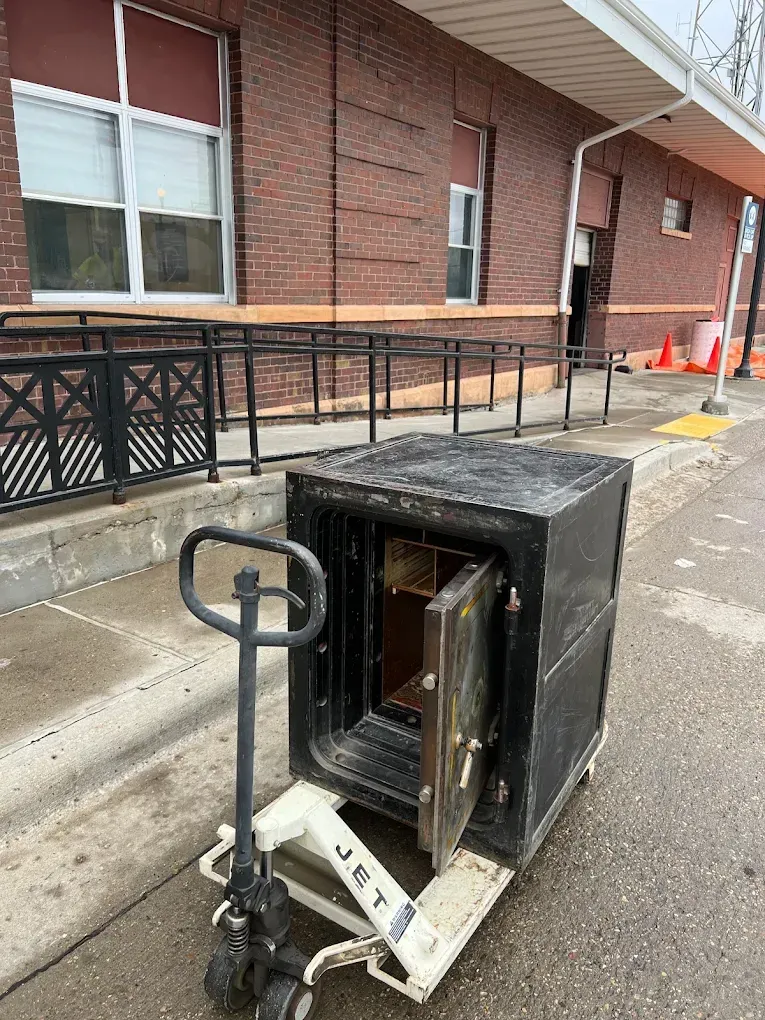
Gun safes commonly run several hundred pounds, and moving one through a finished house without equipment is how floors get gouged, doorframes get chewed up, and backs get wrecked. Professional delivery uses dollies, ramps, and straps to walk the safe through tight corners and stairwells, verifies the floor can take the load along the route and at the final spot, and sets the safe exactly where it will be anchored.
Renters and Crew Housing: You Still Have Options
Dickinson’s energy workforce includes a lot of gun owners living in rentals and crew housing where drilling into the landlord’s slab isn’t on the table. A professional installer can still secure a freestanding safe responsibly — placement that eliminates tip risk and leverage points, and anchoring approaches that don’t require permanent modification where that’s the constraint. Property managers sometimes go the other way and commission anchored commercial installs as a tenant amenity; both are routine calls.
What the Install Visit Looks Like
Expect a placement discussion (or a site check if you’re undecided), the move itself, drilling and bolting to the floor, a level-and-door-swing check, and a walkthrough of the lock. If you later move house, the same crew handles relocation and re-anchoring — and for other secured storage around the property, safe installation services cover fire safes, deposit safes, and commercial units with the same process.
Bakken Locksmith is family-owned, licensed, bonded, and insured, with over 15 years serving Dickinson and western North Dakota.
Need a locksmith in Dickinson? Bakken Locksmith serves Dickinson and all of western North Dakota, 24/7. Call (701) 409-8700 and a locksmith picks up — not a call center.